
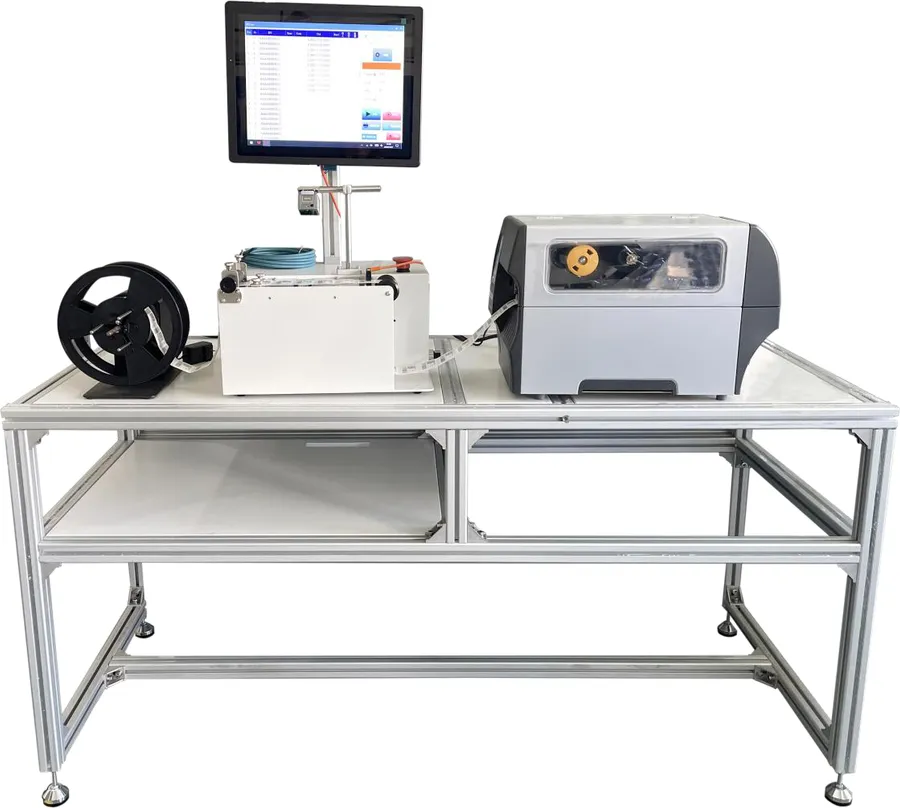
Specifications
- Speed (RF-300)
- Up to 500 pieces/min, depending on the job
- Roll (RF-300)
- Web up to 190 mm, diameter up to 400 mm
- Encoding
- UHF; HF optional
- Verification (RF-500)
- RFID reader and 1D/2D scanner check the chip against the print
- Data
- From Excel or CSV, from the label’s barcode or QR, or by reading the TID
Manufacturer specifications; confirmed in the quote.
Applications
- Care and brand labels for fashion
- Retail labels with variable data
- Logistics and traceability
Frequently asked questions
What does encoding an RFID label mean?
Writing each item’s data into the chip (for example, into the EPC and USER memory) so a reader can identify it. Data can come from a file, from the code printed on the label or from the chip itself.
How is each label verified?
The RF-500 re-reads the chip and scans the printed 1D/2D code to confirm they match; pieces that fail are marked as defective.
Does it work with my label software?
Yes. You can design in BarTender and the machine’s computer prints and encodes with that data.